Concrete Lifting & Leveling in Lexington
Lifting settled concrete back to grade without replacing it. Either mudjacking, which pumps a cement slurry beneath the slab, or polyurethane foam, which is injected through smaller ports and expands to raise it.
We are still finalising the local company for this trade. Send your project and we will route it as soon as that is set.
The short version
Concrete Lifting & Leveling, explained
Concrete rarely settles because the concrete failed. It settles because the ground beneath it moved, usually from washout, poor original compaction, erosion along a downspout line, or a leaking pipe. That distinction governs everything: if the cause is still active, a lifted slab will settle again, and the lifting is a temporary cosmetic result rather than a repair.
Where the ground has stabilized, lifting is dramatically cheaper than replacement and far quicker. A settled driveway section or patio can be back in service the same day with foam, and within a day or two with mudjacking. The slab also keeps its existing color and finish, which a replacement pour never matches. The limitation is that lifting works on slabs that are structurally sound; a slab that is badly cracked into multiple pieces is a replacement candidate.
Cause investigation
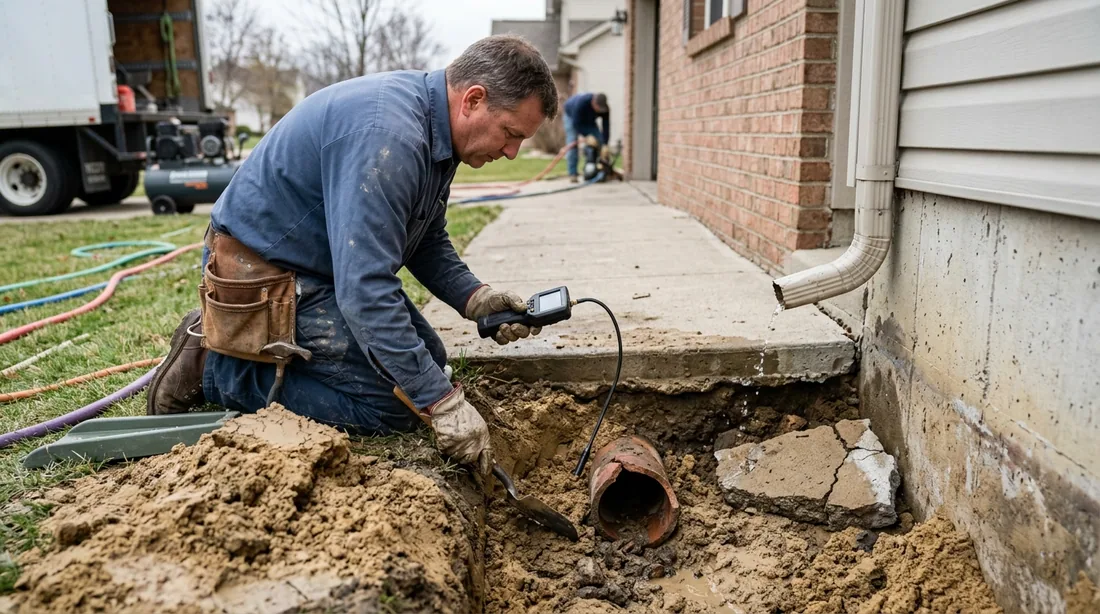
Establishing why the slab moved. Downspout discharge, a broken drain, uncompacted backfill against a foundation, or a plumbing leak each need addressing or the settlement returns.
Void assessment
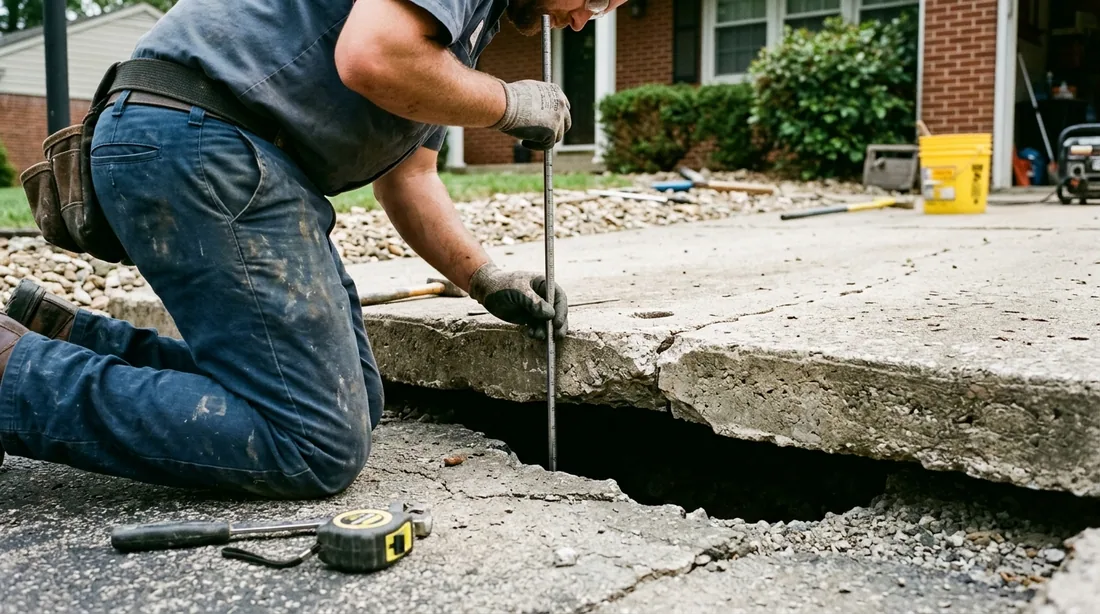
How much empty space exists under the slab determines how much material is needed and whether lifting is even the right answer versus stabilizing in place.
Port drilling
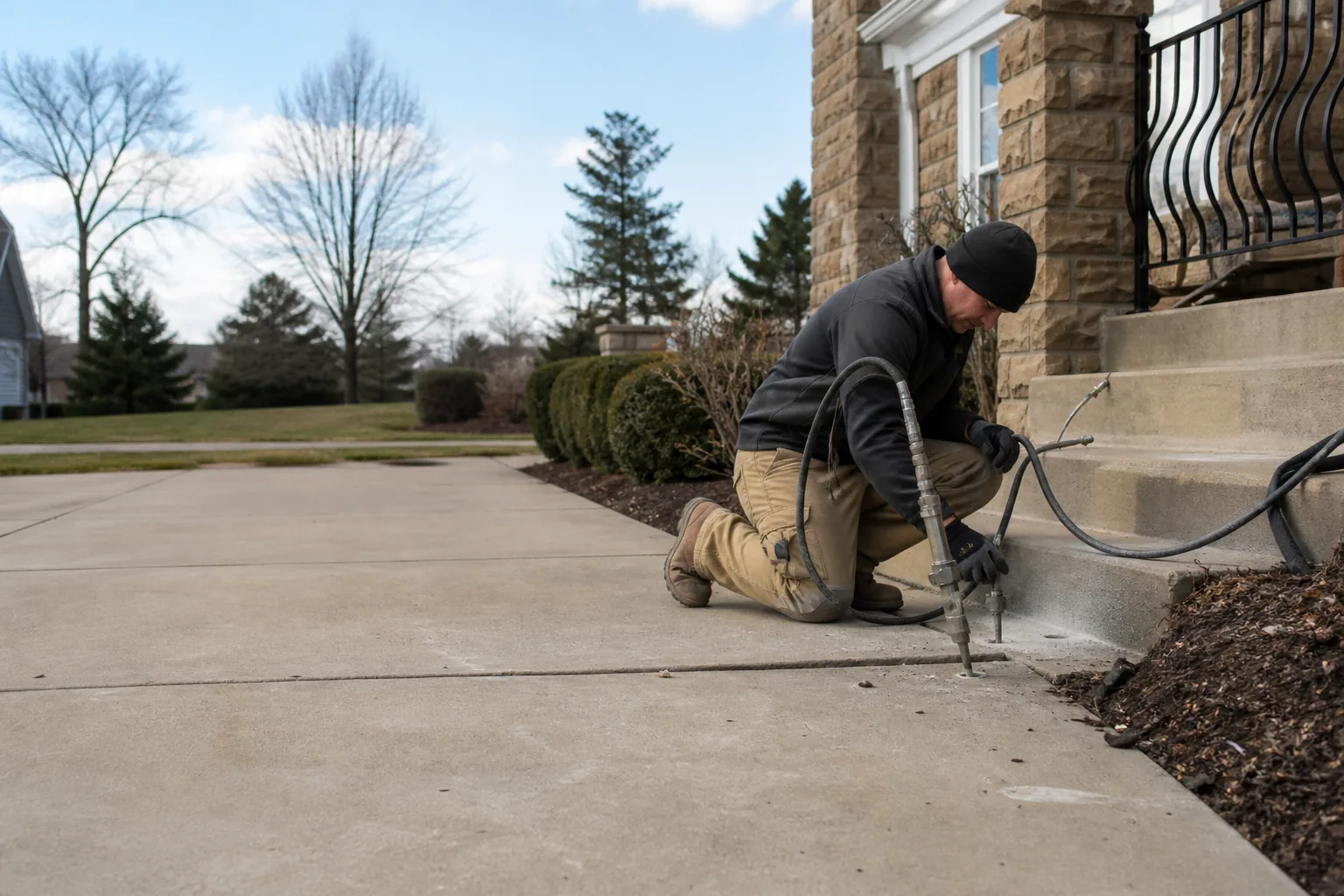
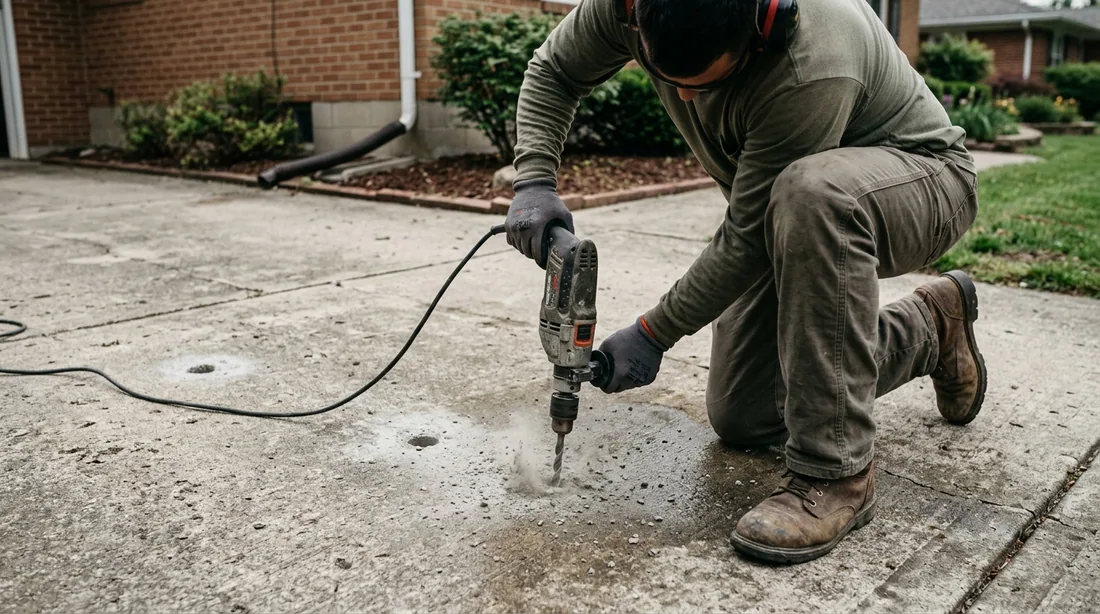
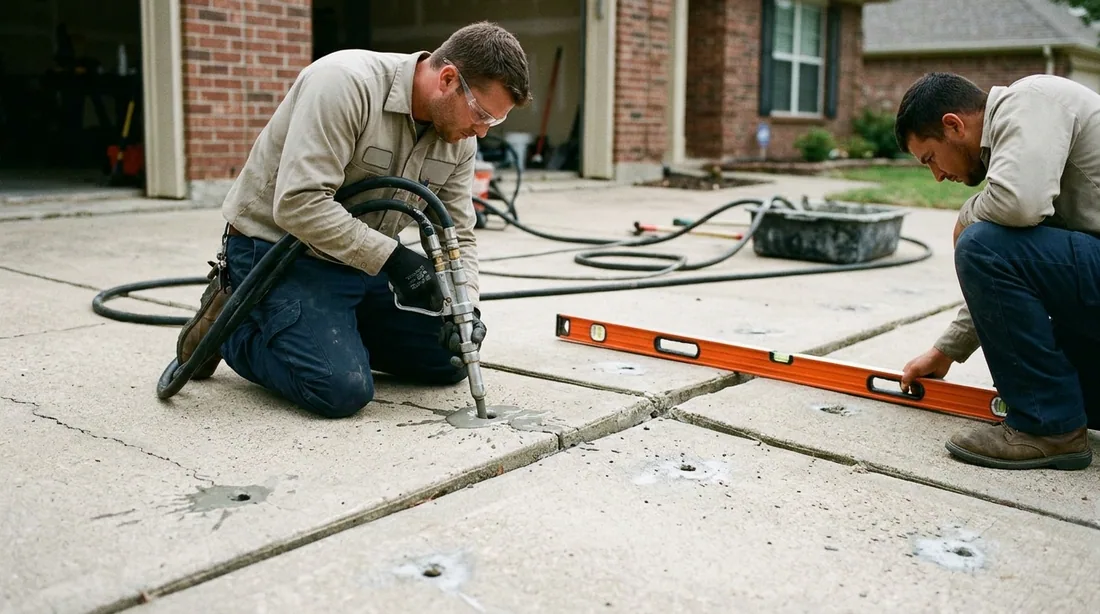
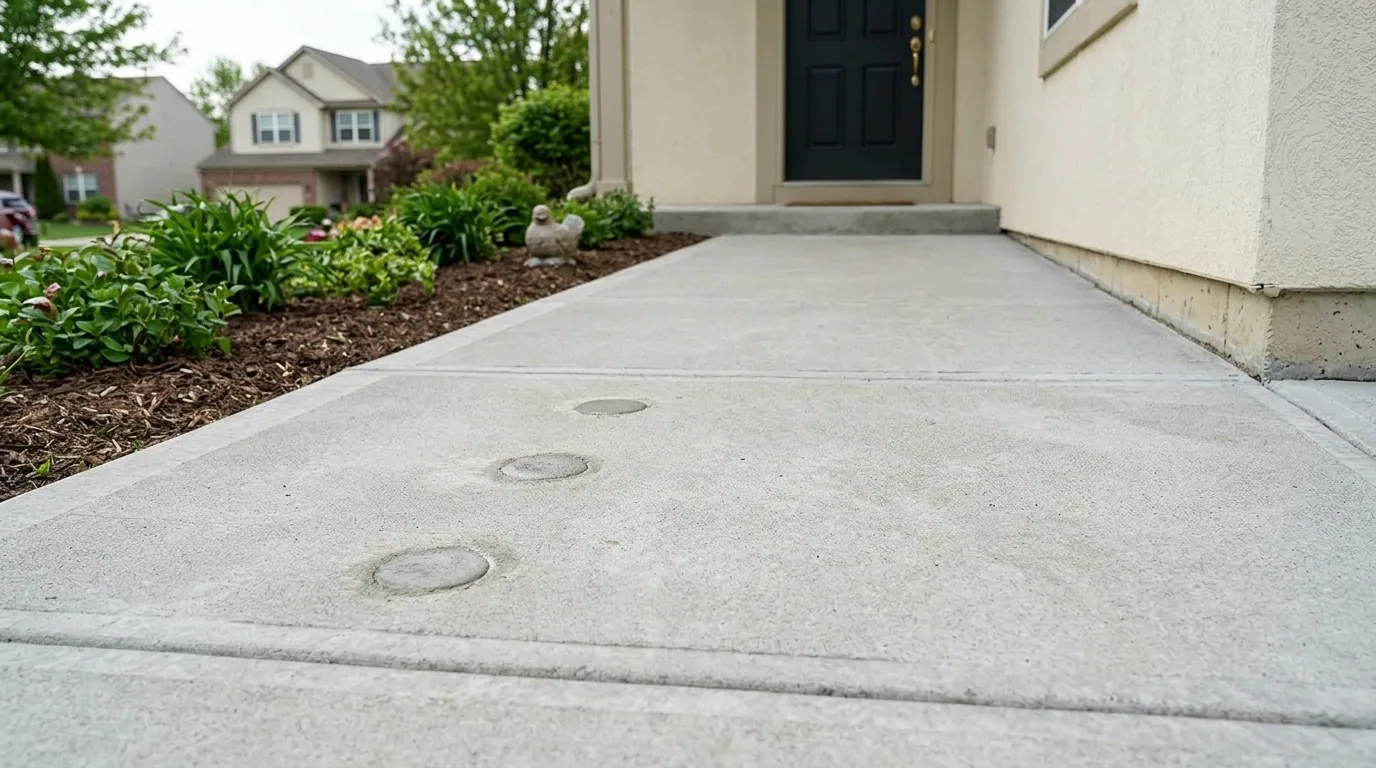
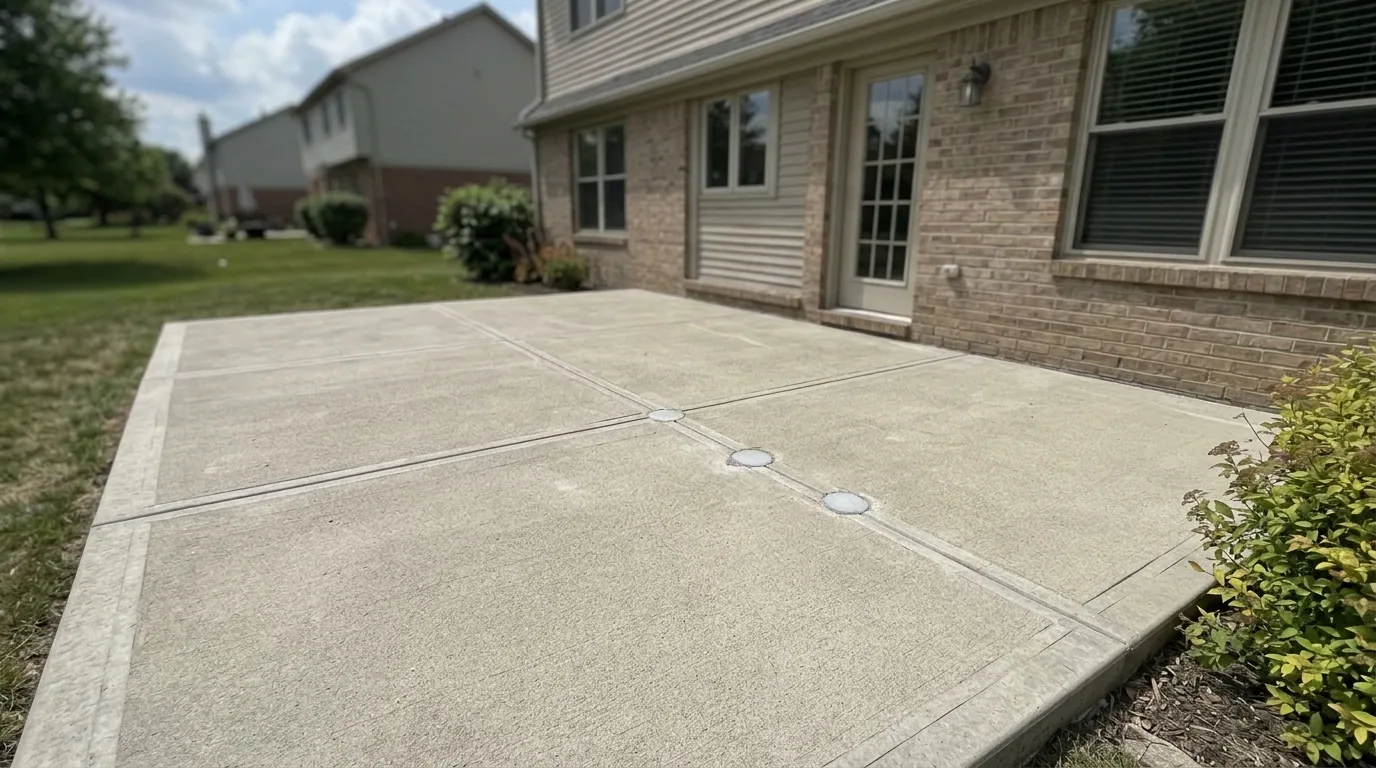
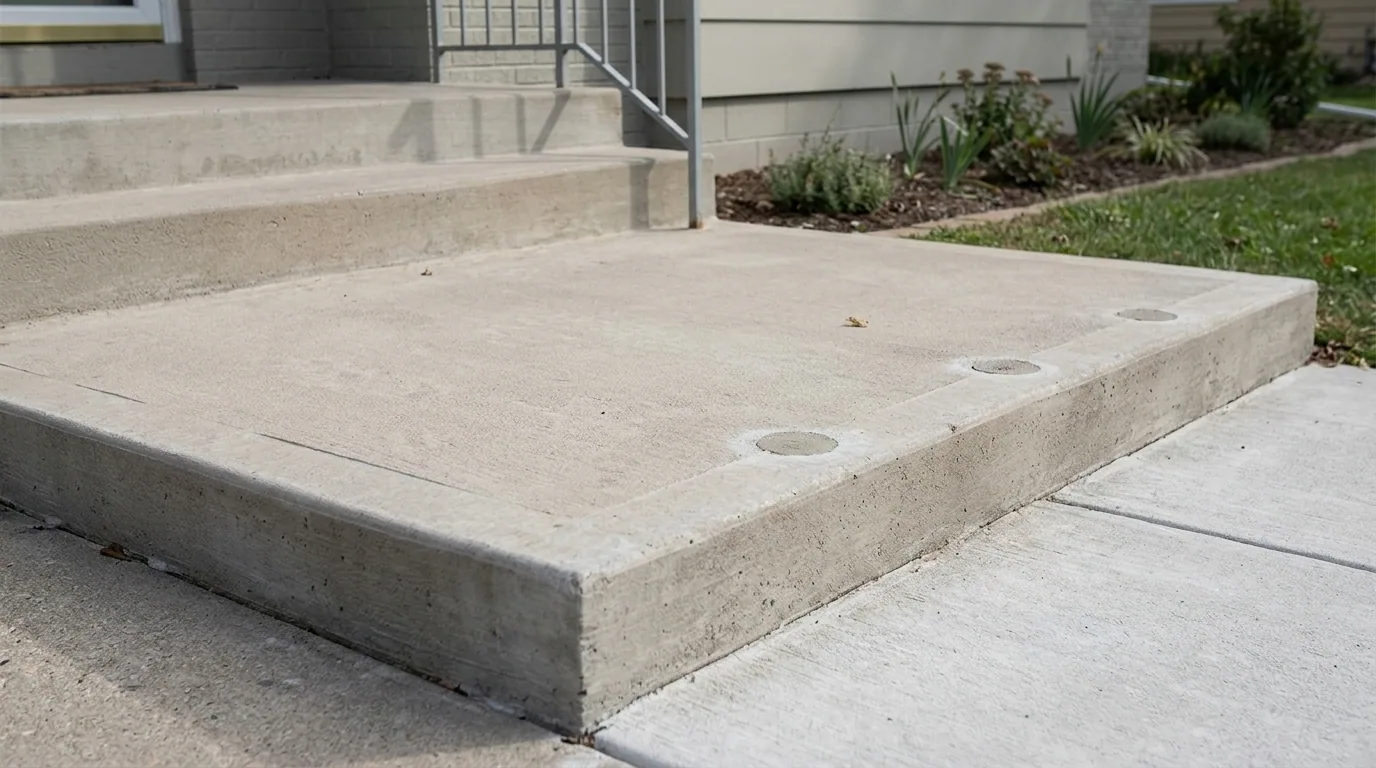
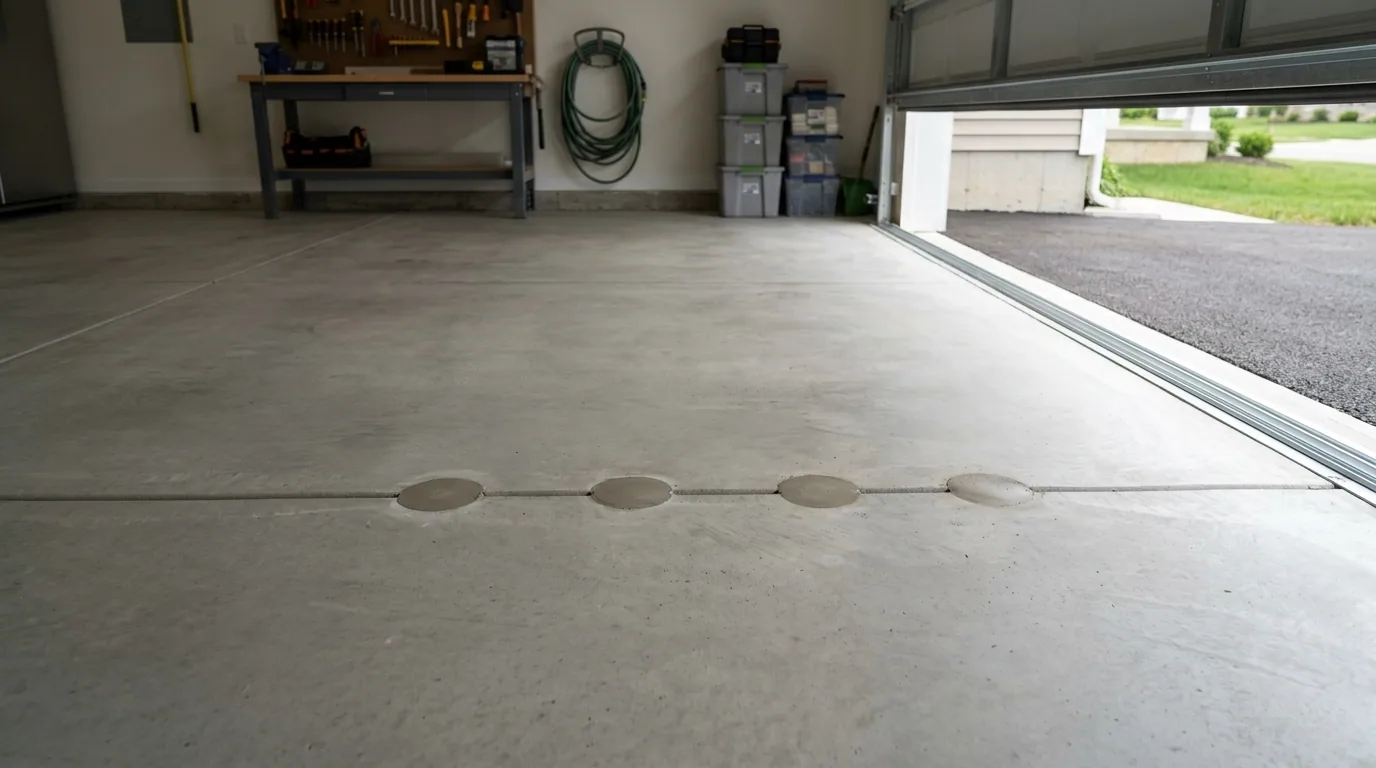
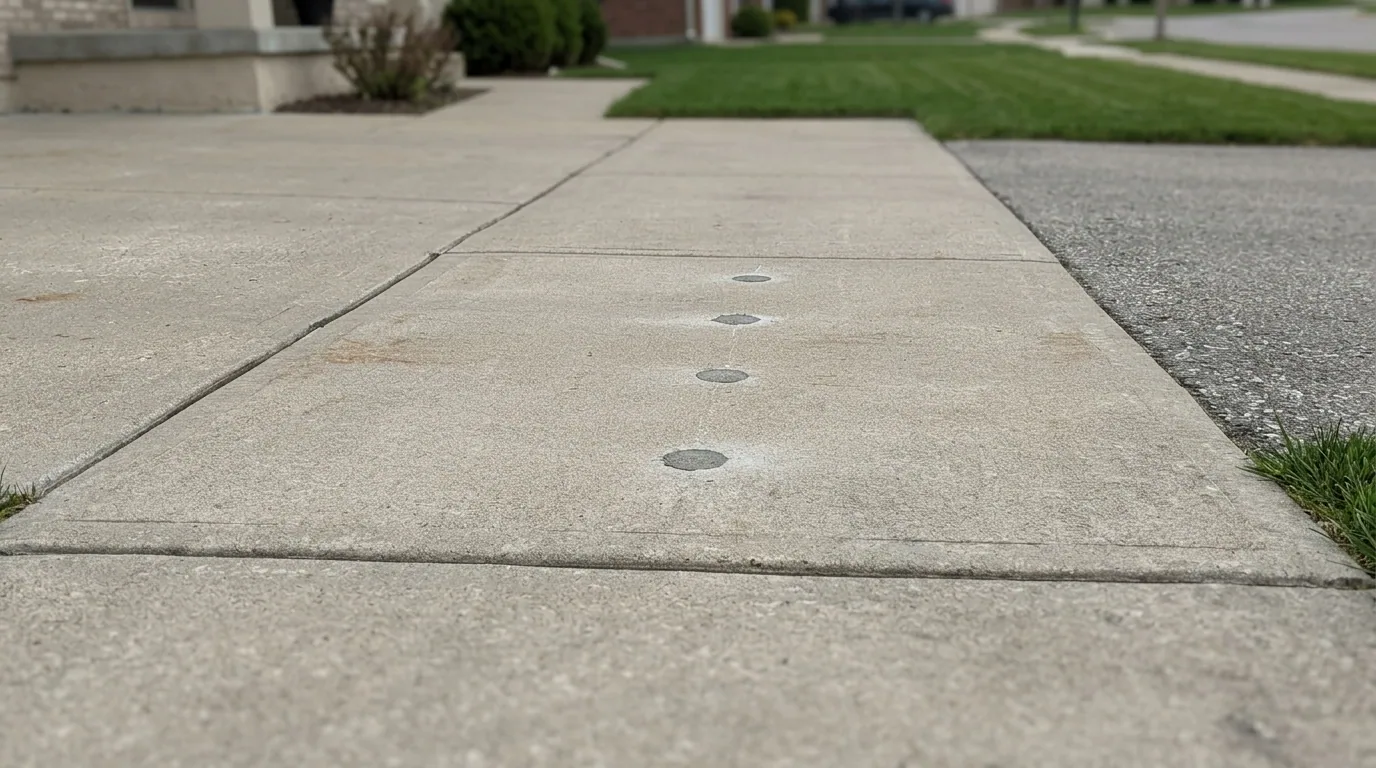
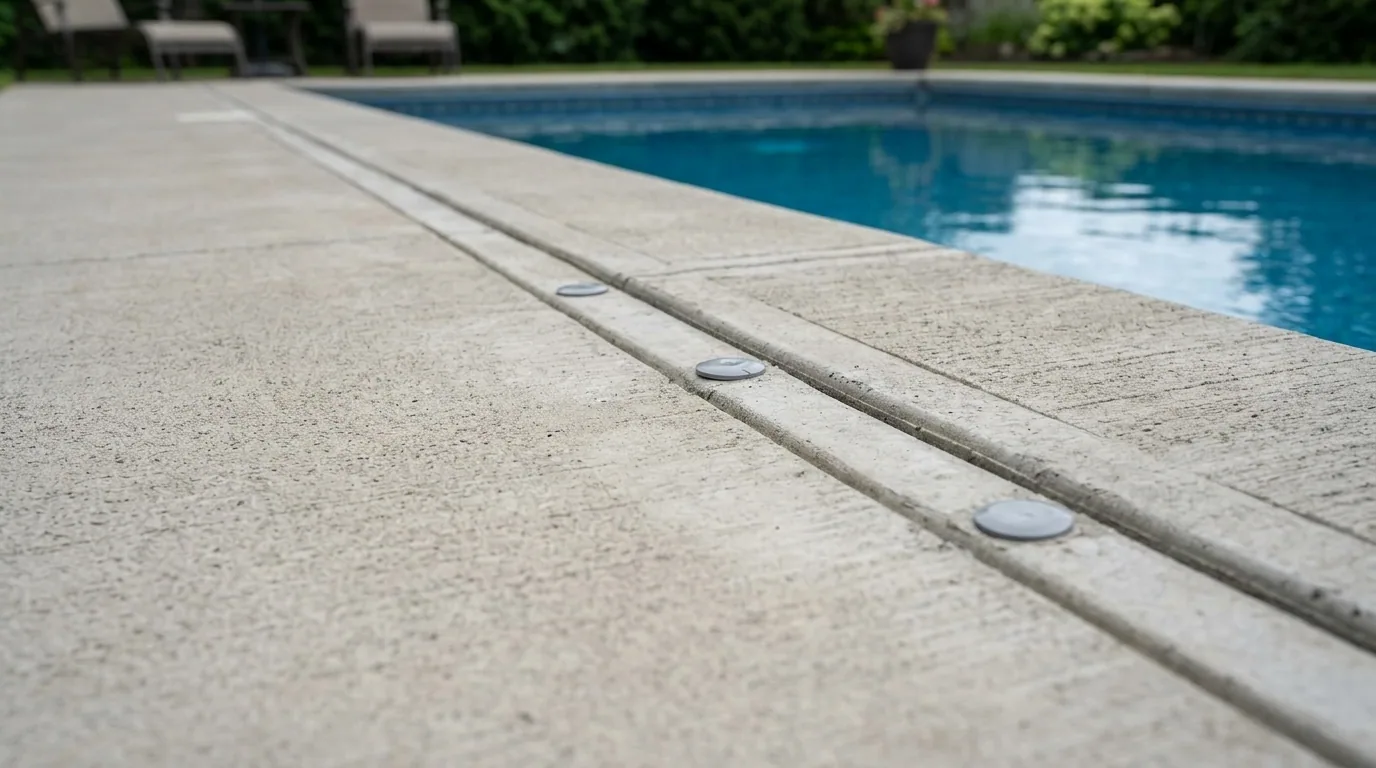
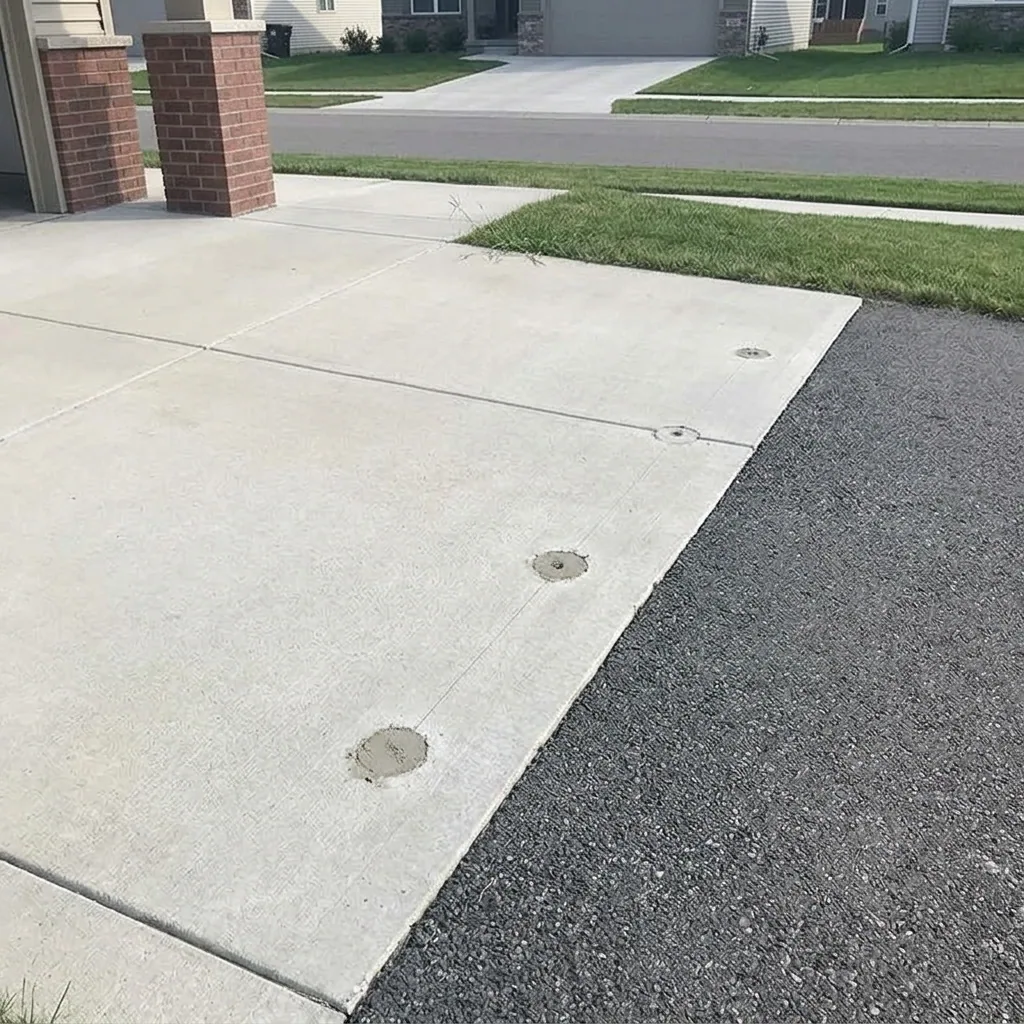
Mudjacking uses one to two inch holes; foam uses ports around five-eighths of an inch. Smaller holes are less visible after patching, which matters on a decorative or visible surface.
Injection and lift
Material is pumped in stages while the slab is monitored with a level. Lifting is done incrementally across multiple ports rather than forcing it up at one point, which would crack it.
Joint and crack sealing
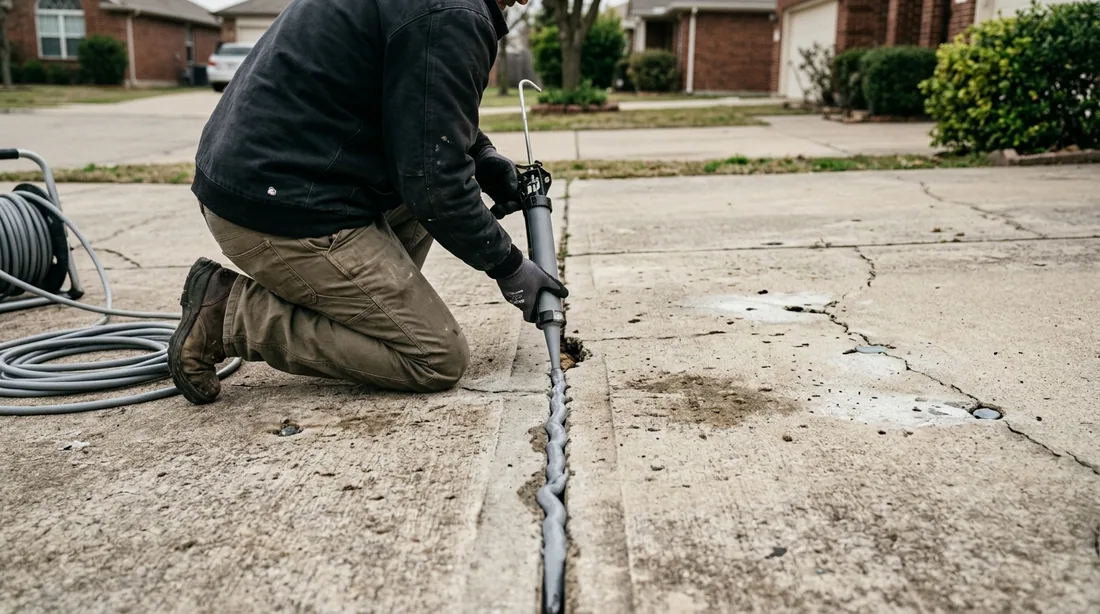
Open joints and cracks are sealed afterwards so surface water stops running straight back under the slab and washing out the support again.
Port patching
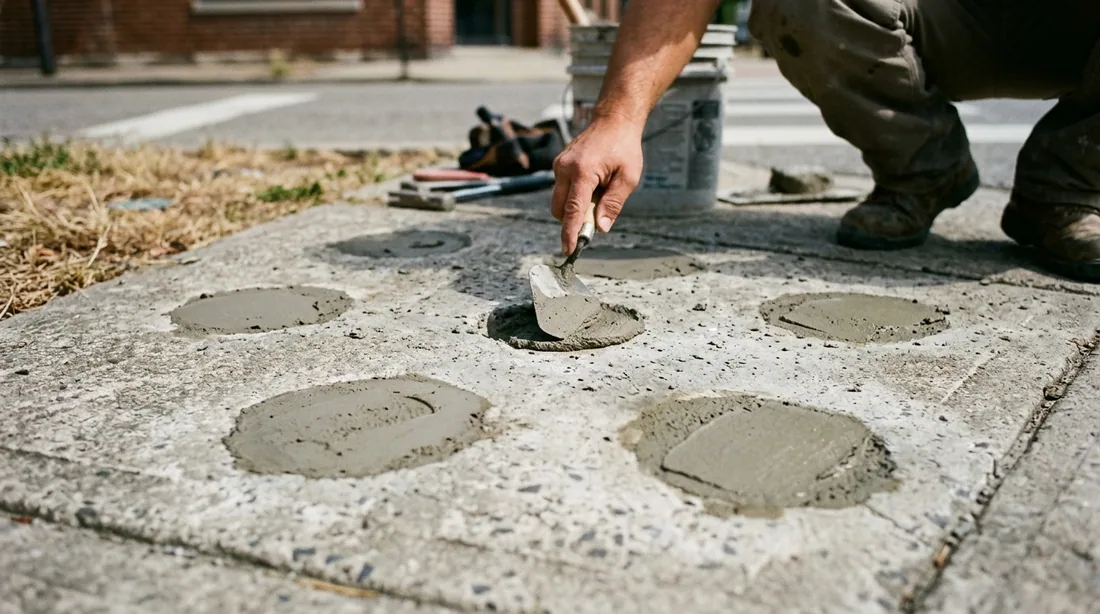
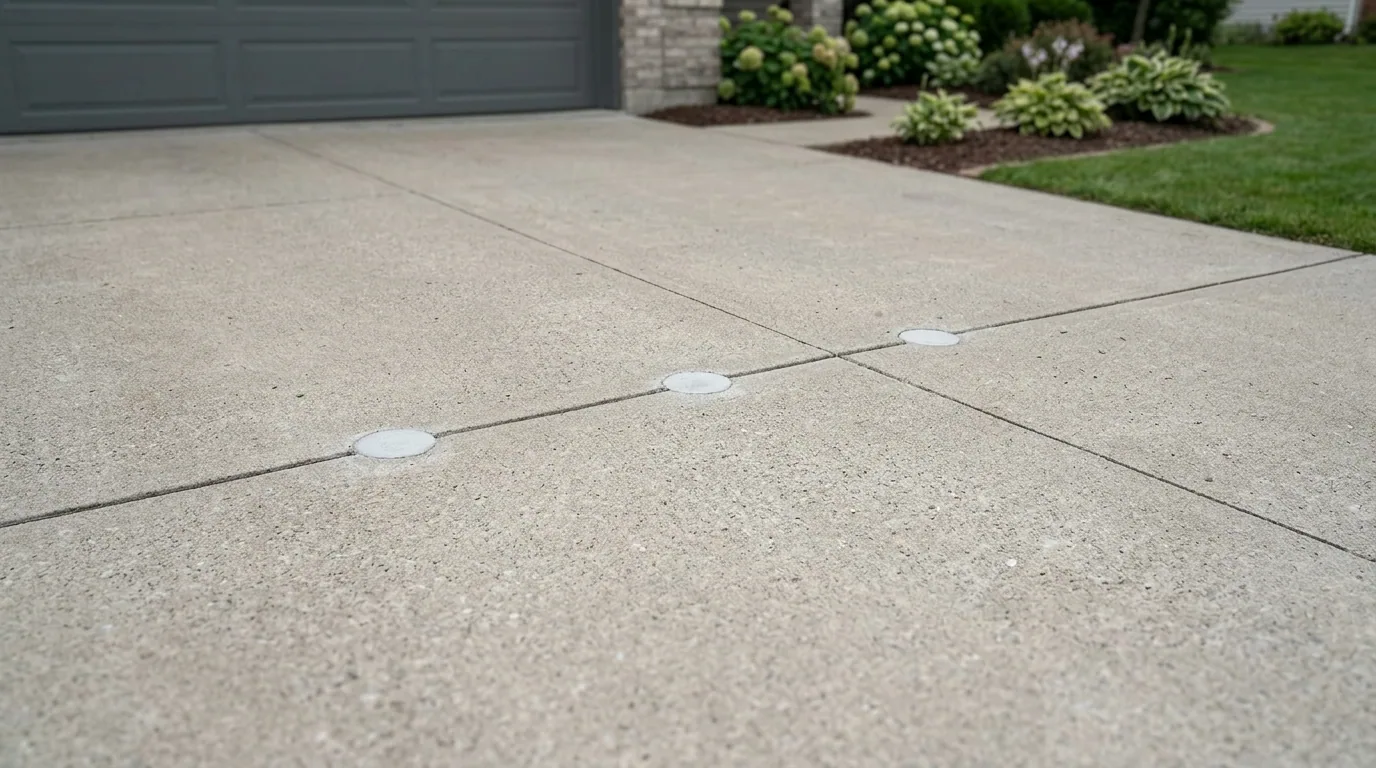
Holes are filled and finished. They remain visible on close inspection; anyone claiming they will be invisible on a weathered slab is overselling.
Budgeting
What it costs
Mudjacking runs about $3 to $6 per square foot; polyurethane foam $5 to $25, and can reach roughly four times mudjacking at the top of the range. Foam is lighter, cures in minutes, and uses smaller holes; mudjacking is cheaper and uses heavier material. Small single-slab jobs usually carry a minimum charge that dominates the per-foot figure.
| Scope | Typical range | Most common |
|---|---|---|
| Mudjacking, straightforward slab | $3 – $6 | $4 |
| Polyurethane foam, straightforward slab | $5 – $15 | $9 |
| Foam, deep settlement or large void | $10 – $25 | $16 |
Lexington specifics
What is different about this work in Lexington
Local climate and building stock change how this job is specified. These figures come from the Census Bureau and NOAA climate normals for Lexington.
- With roughly 69.3 freeze-thaw cycles a year here, water that gets beneath a slab through an unsealed joint expands each cycle and progressively enlarges the void, which is why joint sealing after a lift is not an optional extra in this climate.
- At around 45.2 inches of precipitation annually, managing where roof and surface water discharges matters more than the choice of lifting method, because washout along a downspout line is the most common cause of settlement seen at this rainfall.
- In housing built around 1983, settlement frequently traces back to backfill placed against the foundation during original construction that was never compacted to modern expectations, which tends to show up as sunken stoops, garage aprons and patio slabs immediately adjacent to the house.
Scoping
Do you actually need this done?
The most expensive mistake is paying for the wrong scope. Here is how the usual symptoms sort out.
Process
How the job runs
Survey and cause diagnosis
Levels taken across the slab, void probed, and the drainage or plumbing cause identified. A contractor who does not ask where the water goes has not diagnosed anything.
Method selection
Foam or slurry chosen against soil conditions, load, access and how visible the port holes will be. Weak soils favor lightweight foam; cost-sensitive utility slabs favor mudjacking.
Drill injection ports
Ports drilled in a pattern across the settled area, sized to the method. Pattern spacing determines how evenly the lift distributes.
Inject and monitor lift
Material pumped in stages, moving between ports, with continuous level monitoring. Going slowly is what prevents cracking the slab during the lift.
Seal and patch
Ports patched, joints and cracks sealed so surface water no longer runs beneath. This last step is what protects the work and is sometimes quoted separately.
Common questions
Questions people ask
How much does concrete leveling cost?
Mudjacking runs roughly $3 to $6 per square foot and polyurethane foam roughly $5 to $25, with foam reaching about four times mudjacking at the top of its range. Small jobs are usually priced against a minimum charge rather than by area, so a single sunken step can cost more per foot than a whole driveway. Combining areas into one visit is the main way to improve value.
Is polyurethane foam better than mudjacking?
It is better in specific ways rather than universally. Foam is far lighter, so it does not add load to soil that has already failed; it cures in minutes so you can use the surface almost immediately; and its injection ports are much smaller. Mudjacking costs considerably less and is perfectly appropriate on stable soils and utility slabs where hole size does not matter.
How long does concrete leveling last?
If the underlying cause was addressed, a properly executed lift can last many years, effectively as long as the slab itself. If the cause was not addressed, expect it to settle again, sometimes within a single wet season. The durability question is almost entirely about drainage and soil rather than about which injection product was used.
Can any sunken concrete be lifted?
No. Lifting works on slabs that are still structurally sound, even if cracked in one or two places. A slab that has broken into multiple pieces that move independently, or one that is severely spalled and deteriorated, is a replacement candidate. A contractor willing to lift anything regardless of condition is worth a second opinion.
How long does the work take?
Most residential jobs are completed in a few hours to a day. With polyurethane foam the material cures within minutes, so a driveway can often take traffic the same day. Mudjacking uses a heavier slurry that needs longer before full load, commonly a day or so. Both are dramatically faster than removal and replacement, which involves cure time measured in days to weeks.
Next step
Get a real number for your project
Ranges only go so far. Someone has to look at the actual job.
What this site is
Lexington Concrete Lifting is a referral site, not a contractor. We do not hold a license, own a truck, or send a crew. We research concrete leveling pricing and practice, publish what we find, and hand your request to a vetted local company in Lexington.
That company quotes, schedules, and stands behind its own work, and it contracts with you directly. We do not mark up the price, and you pay us nothing.